Happy Passover ecard: seder night, matzah and your warm wishes
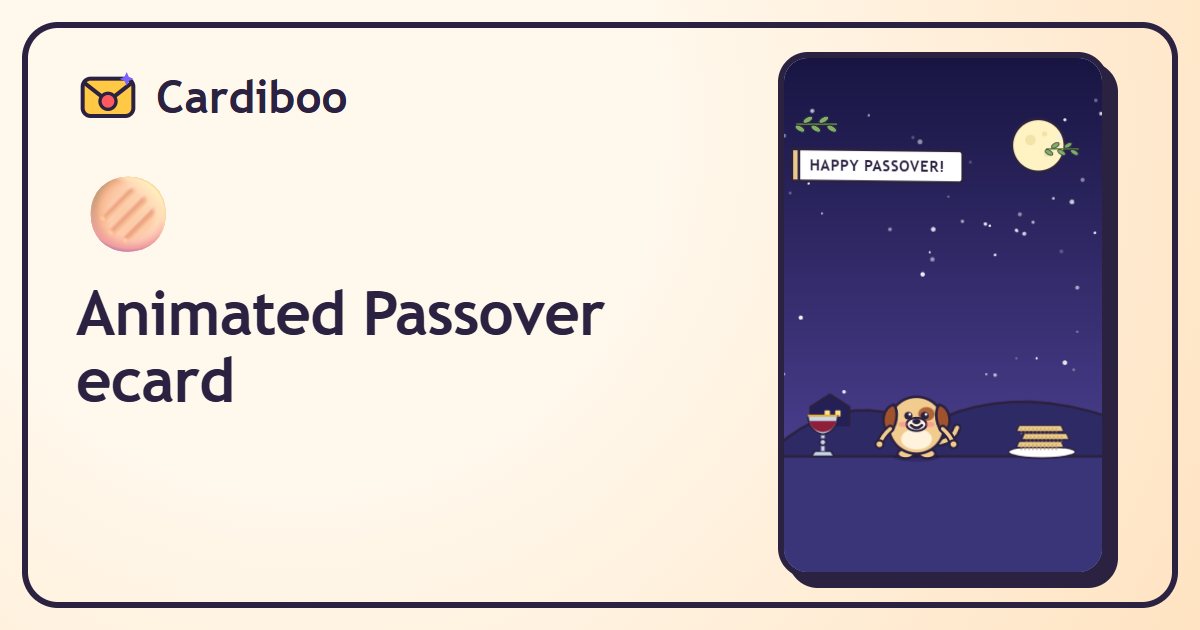
A Passover card should feel like the table on seder night. On Cardiboo, the scene opens on a starry evening: matzah on its plate, a cup, spring branches, their name in the middle and a soft melody. Then your wishes appear, signed.
It's free, no sign-up, and the card opens in the browser straight from the link, on any phone or computer.
Free, no sign-up. Cards and photos delete themselves after 90 days.
How to make it, step by step
- Open the machine on “🫓 Passover” with the button below.
- Type their name, then yours in “From”, so they know who it is from.
- The character, the evening scene and a warm message are already picked: if you like them, tap “Ready: send it 🚀”.
- To change things, tap “Customize”: add a real face with “📸 With a real head”, or pull the lever for another hero (Doggo, Kitty, Pompom), a plane or a giant gift, and another scene.
- Write your own message, or pull the little lever for one in a sweet or poetic tone.
- Send it by text, WhatsApp, email or with a link to copy.
What to say for Passover
“Happy Passover” is always right. Many Jewish families also say “Chag Pesach Sameach” (a happy Passover holiday), “Chag Sameach”, or “Chag Pesach Kasher v'Sameach”, a kosher and happy Passover. The card writes “Chag Pesach Sameach” and “Happy Passover”, and its message lever only offers a sweet or poetic tone.
Passover message ideas
- “Happy Passover! May your seder be warm and your table full of the people you love.”
- “Chag Pesach Sameach to you and the whole family.”
- “Thinking of you on seder night. Wishing you a joyful festival of freedom.”
- “May this Passover bring you peace, family time and a gentle spring.”
- “We can't be at your table this year, but our wishes are. Chag Sameach!”
- “Wishing you a meaningful Passover and happy days with the ones you love.”
When to send it
In 2027, Passover begins on the evening of Wednesday, April 21, with the first seder, and ends on Thursday, April 29 (outside Israel). Many observant families put their phones away for the first days of the holiday: send your card a few days before, or by Wednesday morning at the latest, rather than on seder night.
At the seder, families read the Haggadah together, retell the story of the Exodus and eat matzah: during the eight days of the holiday, no leavened bread is eaten. Passover is a holiday of its own, with its own card. In winter, there's also the Hanukkah ecard, with its candles.
Who to send it to
- Family far away: a card that arrives before the seder, when you can't be at the same table. The person who receives it can switch the language with one tap (🌐).
- A Jewish friend or coworker: a kind word before their holiday begins.
- Grandparents: put a real face on the character, and add up to four more faces that burst in at the end, with the animated card with your photo.
Frequently asked questions
Is the card respectful of Passover?
Yes. The scene shows a starry evening, matzah, a cup and spring branches, with a soft melody: no bread or cake, no Easter bunny or eggs, and no gags.
When should I send it?
A few days before the first seder, on the evening of Wednesday, April 21, 2027, or by that Wednesday morning at the latest.
Is it free?
Yes: no account, no subscription, no payment. Only the messages written by AI are limited to 10 per day per device; after that, the machine offers unlimited “surprise messages”.
Do they need to install anything?
No. The card opens in the browser straight from the link, on iPhone, Android or a computer.